
Write Gooder Sentences
A Book Review by Dominick Maino

Write Gooder Sentences
A Book Review by Dominick Maino
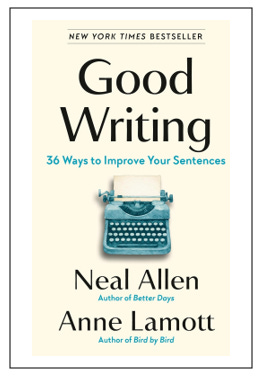
Allen N. Lamott A. (2026). Good writing: 36 ways to improve your sentences. Oxford University Press. 208 pages. Amazon Hardcover $25.16
Warning. This post could elicit a Trigger Event.
It’s been brought to my attention that I was poet shaming while attempting to use humor, sarcasm and my bad poetry. Nothing could be further from the truth.
This book review compares two books. One of them interesting, informative and even funny. The other quite boring but necessary. You need to read both to avoid being a barista instead of a full-time poet.
Read the books. Become a better writer.
Mea culpa to those triggered.
DM
If you loved studying grammar in grade school, high school and college, I think I met you as an unemployed poet. You are working at Starbucks, writing little poems on customers’ paper cups that contain their Brown Sugar Oat-Milk Cortados (130calories)
The Starbucks Poet
By Dominick Maino

An unemployed poet,
rich in word art.
Using words worthy
of a Bard’s heart.
Scribbles verse, new and shiny
Into cups so tiny,
Creamy brown sugar, oat-milk Cortados
Given to customers, Hooray and Bravados!
Most of us were bored to death when we studied writing, especially grammar. Could it have been the fault of all those 102-year-old cranky English teachers forever nitpicking?
It was because they had to use Strunk and White’s Elements of Style.
[Strunk W., White, EB. (1999) The Elements of Style, Fourth Edition. Pearson. 105 pages. Amazon Softcover. $6.49 or free at https://shorturl.at/ahECl .]
You knew that after reading the first few pages, it was going to be (pick one):
Dull
Tedious
Monotonous
Dreary
Tiresome
Mundane
Insipid
Mind-numbing *
I always pick #8, but any or all of the above would do.
You must, however, read, understand, and use The Elements of Style if you write. It’s trial by grammar combat, which sets the foundation for all you write during your literary life. [It also gives you an exhilarating feeling when you know these rules and then break them to fit your story.]
You have no choice but to read Good Writing if you expect to be a great writer.
Neal Allen was a newspaper reporter and corporate executive. This results in a focused, practical and structured style of writing. He mentions his days as a newspaper reporter many times in the book. His co-author and wife also notes that he tends to be a show-off nerd with Masters’ degrees in political science and Eastern Classics.
Anne Lamott struggled with many demons, including alcoholism, bulimia and depression. She was also a single mother. Anne’s dad was a writer, so at an early age, she was immersed in storytelling and an intellectual life. She is also the recipient of a Guggenheim Fellowship.
The book starts with a “Read This First” section. Neal tells you about his background and how he began formulating his 36 rules. He mentions Thomas Mann to show off his nerdiness. Anne notes that soon after meeting her husband, she started handing out the rules to her writing students. She also uses these rules to review her writing before handing the manuscript to an editor. Anne has published 20+ books.
Now for a few of the rules:
Rule #1: Use strong verbs. Instead of walked or stood, use trudged or malingered.
Rule #2: Question Being and Having. To be and to have are weak, weak, weak. (unless you are Shakespeare’s Hamlet, then it’s OK)
And …. Get rid of passive sentences, use strong Anglo-Saxon words, trust your voice, don’t be afraid of the semi-colon; destroy the word “very” and throw it into the trash heap…
Then there’s “remove the boring stuff,” use metaphors; say it, say it, say it three times to hammer home your point.
Many other rules follow. They all have solid descriptions by Allen and added commentary (often humorous) by Lamott.
The last three are Break the Rules, Finish What You Start, and Find and Use a Formidable Editor. I like these last 3 the best.
This is a precise and practical set of rules for better writing, one sentence at a time. It’s perfect for those who are new to writing and a solid guide for the rest of us. Advanced and well-published writers may find this a bit simplistic. I’m sure that if they use these rules as they write, several can be applied to their work.
I recommend this book to all who write. Buy it. Check it out from the library. Do this Now.
(Note: This review was written at a fifth-grade reading level to enhance clarity, using only a few of those unwanted passive sentences. No verys, no -ly adverbs, in my natural voice, using ; )
Note #2: I always told my students to “write to inform and not to impress”. This was difficult for them to comprehend when they were writing for a group of doctors.